
Our fifth full day in the Cotswolds saw us beginning our morning at Stow Town Coffee, a tiny shop & roastery across the street from our cottage that’s known for providing the town with quality coffee. The shop is cozily nestled within an old limestone barn, so cozily that you order your coffee at the window and take it to-go. As Andrew and I ordered our lattes, we chatted with a couple who we presumed to be the owners and they told us of a train trip they had once taken through New England that had taken them not far from our neck of the woods in Connecticut.
Happily carrying our oat lattes, but now on the hunt for pastries, we walked through Talbot Court and found our way to Otis & Belle, a lovely little café and French-style bakery. I enjoyed a berry cake and Andrew couldn’t choose between a butter croissant and cinnamon roll, so he got both. You could tell that we were feeling our departure from Stow-on-the-Wold in only two days, as we had been sure to choose places we hadn’t been yet. And, whereas we’d focused on heartier breakfasts that would fuel our explorations previous mornings, we had stepped into our phase of enjoying the pastries.
We hadn’t yet spent a lot of time in Talbot Court, which has certainly had a bit of money put into its aesthetics, so as we breakfasted in front of the bakery, we noticed more shops we hadn’t yet been in. We next set foot in what would become our favorite little boutique in town, which I believe was called Domestic Science, where we gawked at ceramics and kitchen items, ran our hands across gorgeous textiles, and tested several natural fragrances. Of course, Andrew managed to notice a tiny bucket of tools that had been placed in a corner as if the owner didn’t know quite what to do with it. When he went up to the counter to pay for the rowan berry lotion (our surname means “By the rowan tree,” so it was a sweet gesture) he’d picked up for me, and the small antique hammer he’d pulled from the bucket, the shop owner had giggled in disbelief that someone was buying the hammer. When we would return to the shop two mornings later, she would say, “Oh, you’re the guy who bought the hammer!”
By now, it was time to meet our taxi and head out though the wolds to a place I had been excited to visit for months. Our driver, Edwin, was incredibly friendly and we chatted with him about his former life in Kenya, his children, and about the effects of global warming on both Kenya and England. He dropped us at our destination and said he’d return in an hour and a half.
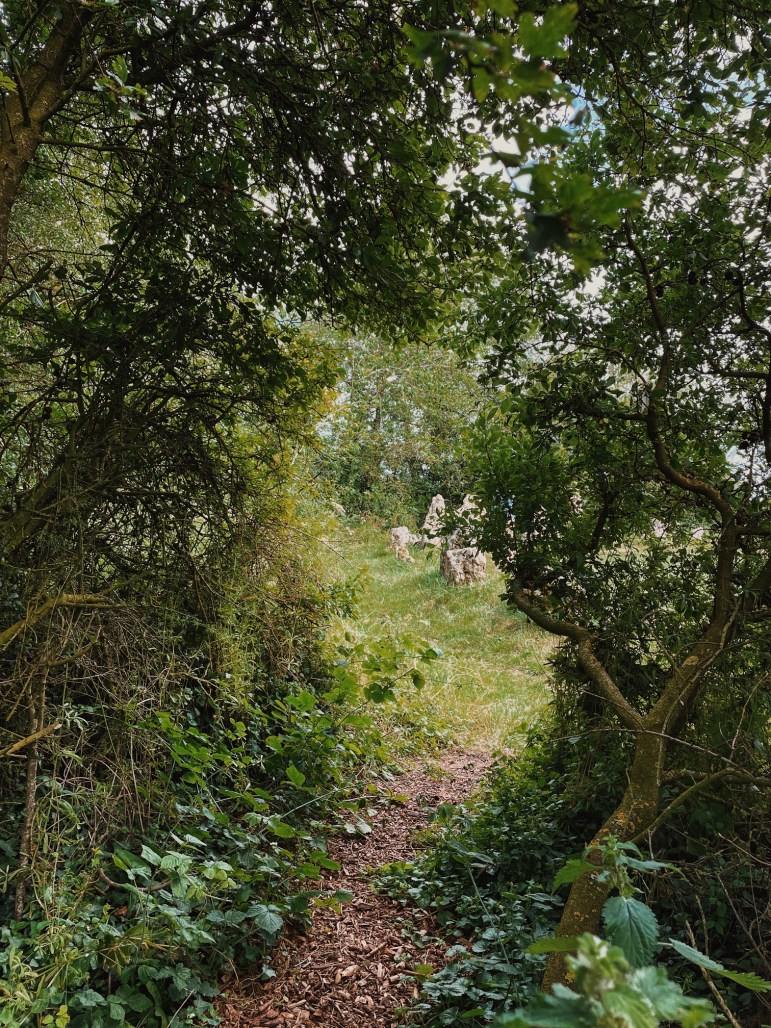
Just off the small parking area, and through the tree line, we spotted them: The Rollright Stones. I stood and took in the circle of stones, called “The King’s Men,” which are believed to have been erected around 2,500 BC for communal ceremonies. Their name comes from a legend about a witch who turned a king and his army to stone, and the stones are said to be uncountable—with either negative or positive consequences (depending on which story you hear) if you count the same number three times.

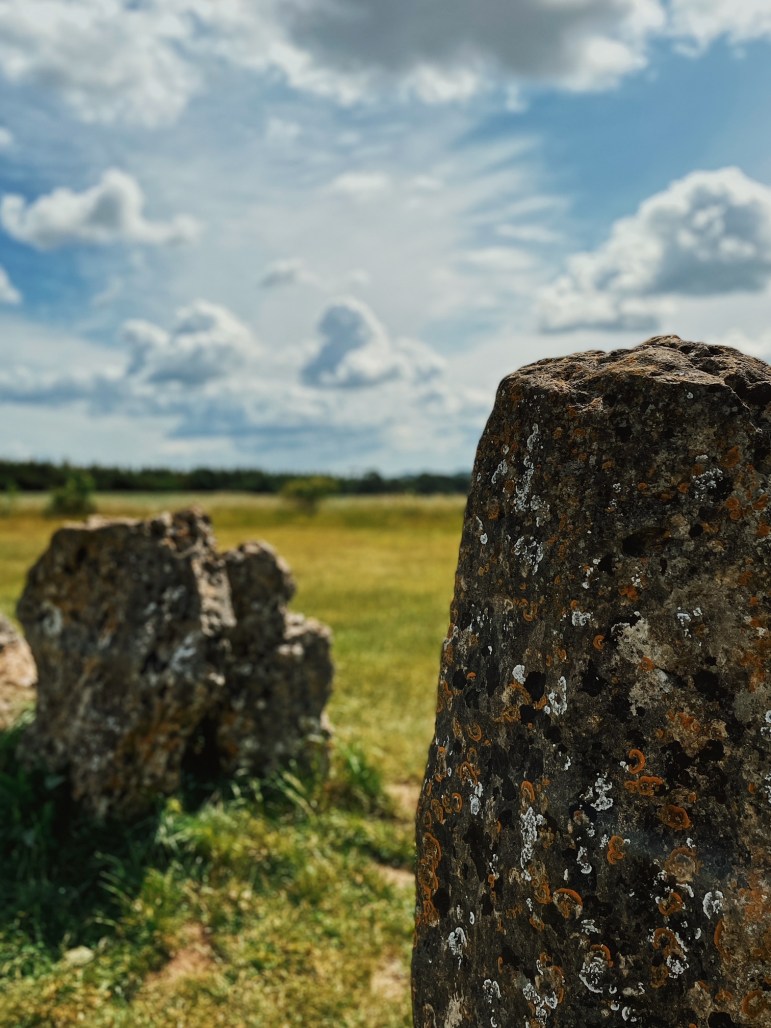
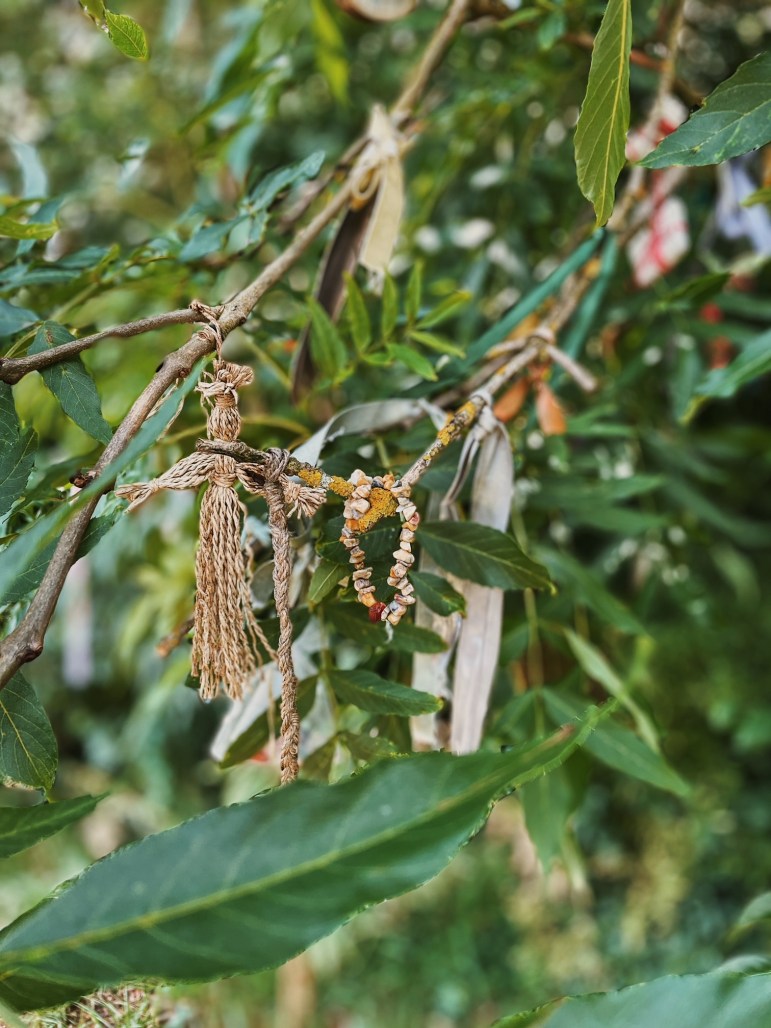
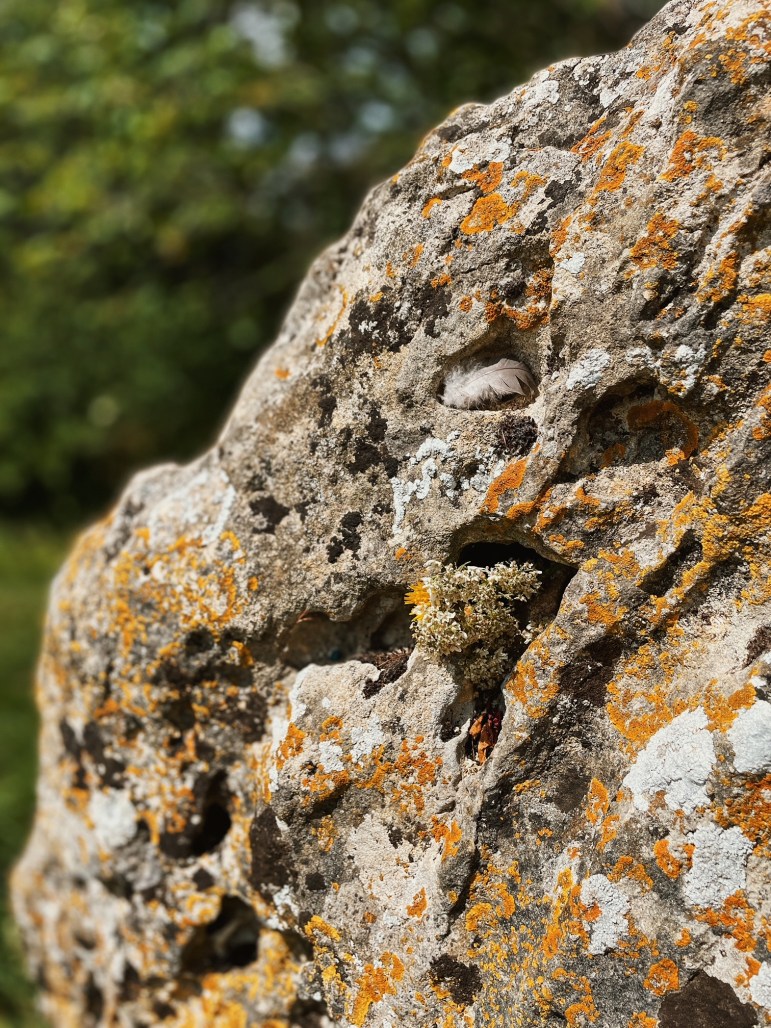
We must have arrived at the perfect time, as we had the stones to ourselves for quite a while. We both skirted the circle, examining the offerings of feathers, crystals, flowers, jewelry, and more left on or within the holes in the stones. The summer solstice had been only five days before, so there were numerous remnants of ceremonies, celebrations, and worship. I followed a path of tiny wicker men and various other offerings into the woodline, which opened up into a small, maze-like copse strewn with ribbons, sachets, feathers, beads, and more. Ashes from ceremonial fires dusted the ground. I took my time admiring the offerings, and when I made my way back out of the wood (only slightly wondering if I had unknowingly stepped into a portal to another time), a few others had joined us. As I looked around at the stone circle once again, not wanting to miss a thing, I felt drawn to a little feather placed in a hole in one of the stones and took a photo of it. Andrew had been gathering wildflowers for a small bouquet and set it atop one of the stones.
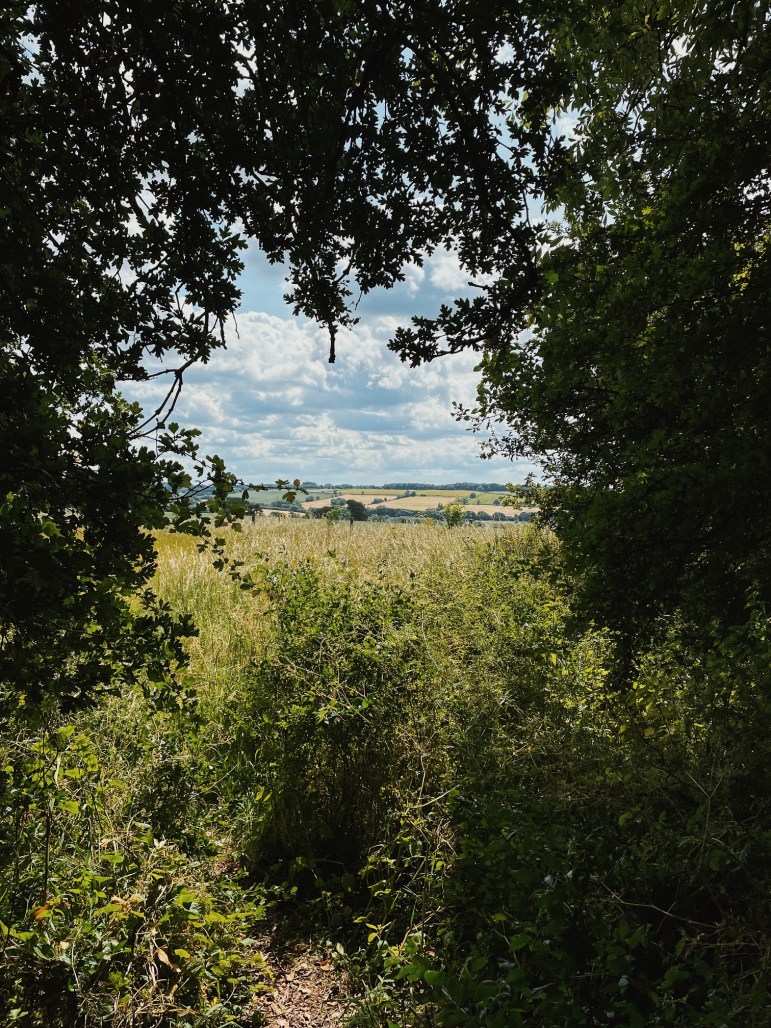
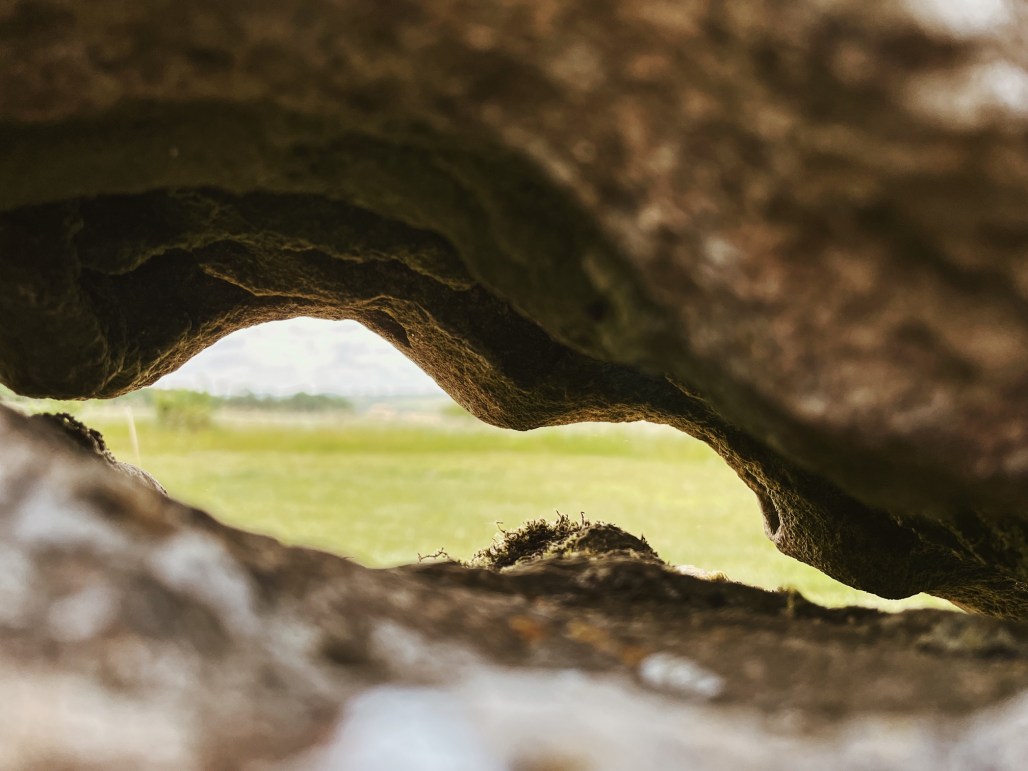
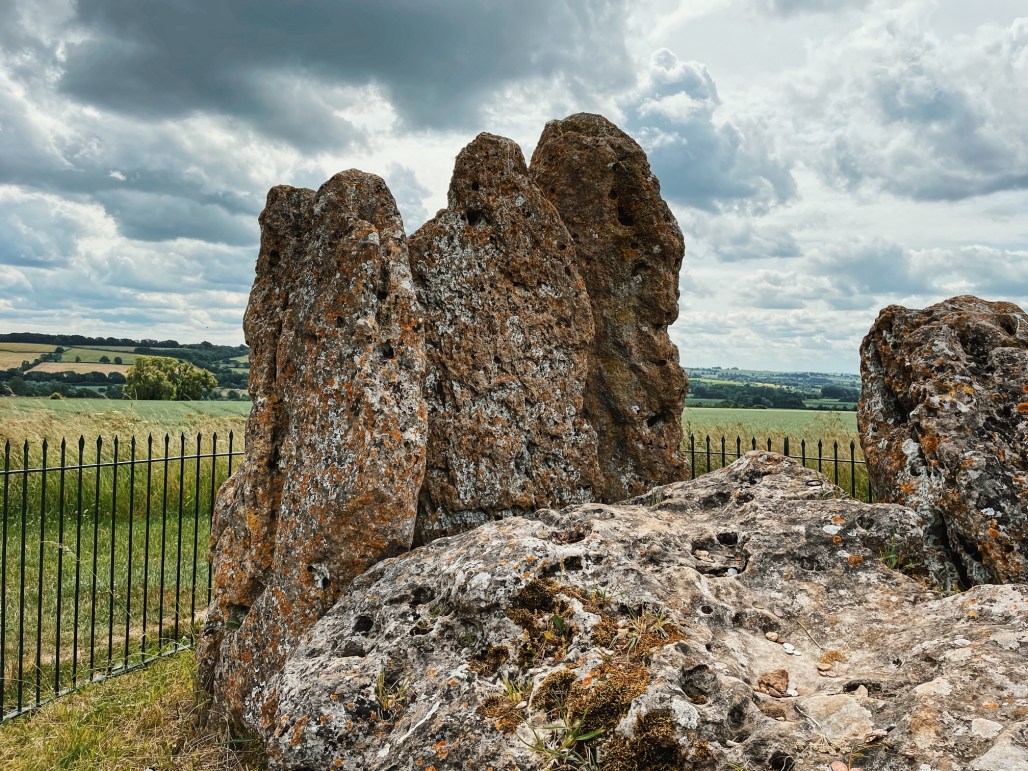
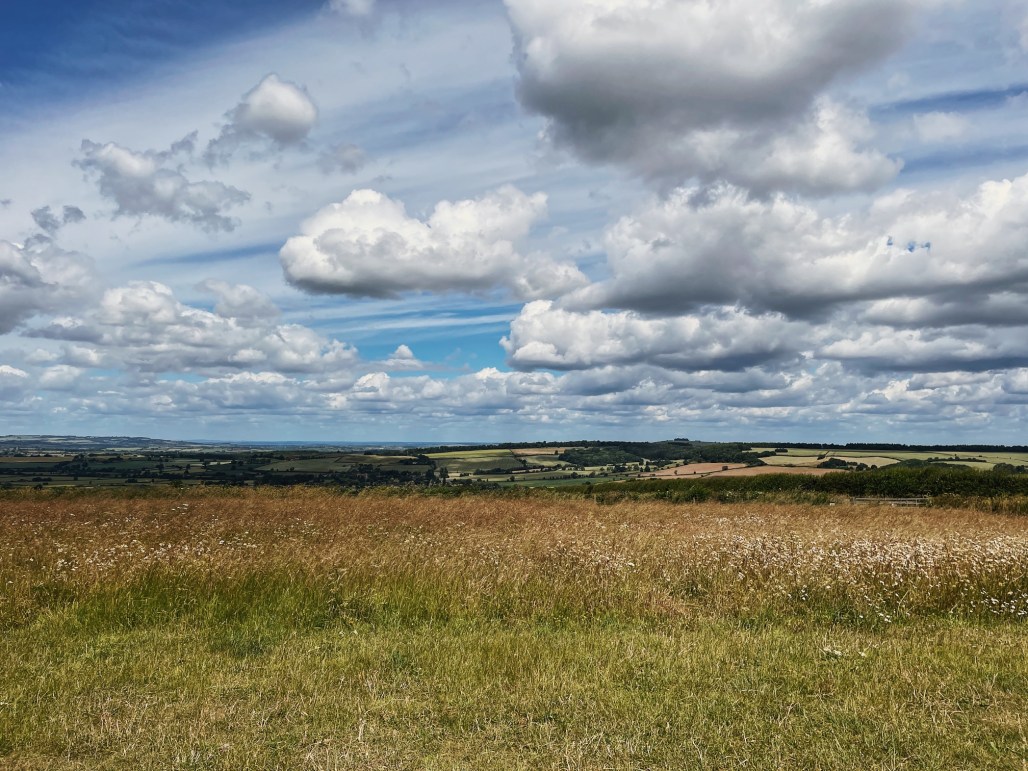
As the stone circle became a tad busier, we made our way to see a placement of stones called “The Whispering Knights,” which are said to have been erected in 3,800 BC to mark the entrance to a burial chamber. Legend states that these whispering knights were conspiring against their king—that is, before the king and all his men were turned to stone by the witch. The view beyond the stones, which sit up on a hill, and out over the wolds and the village of Little Compton is absolutely stunning and makes the experience all the more special. We were entertained by a little girl, who was dressed in a pink princess costume, who made a show of being very bored with the whole experience.
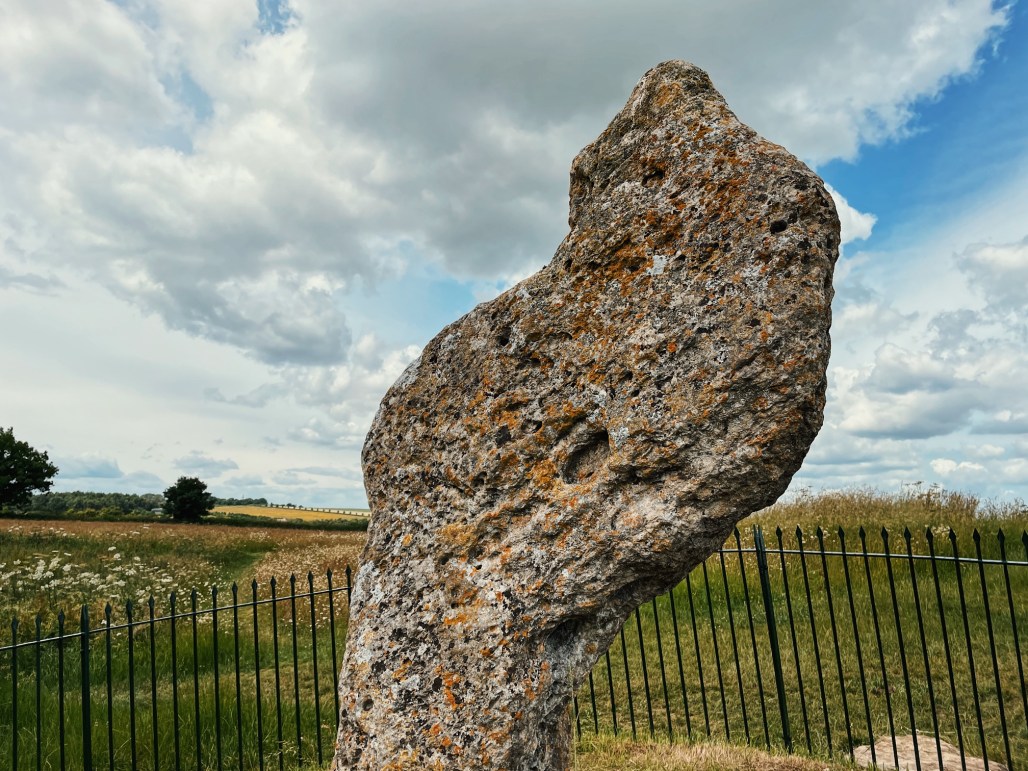
Retracing our steps and crossing the road in the opposite direction, we hiked uphill a bit to reach the last of the Rollright Stones—“The King Stone.” This single, upright stone, is believed to have been placed 2,000 years after the Whispering Knights (so, around 1,800 BC) to mark a Bronze Age cemetery. Evidently the stone’s strange shape is attributed to 19th century visitors chipping off bits of the stone to keep as lucky charms and/or to keep the devil at bay. As with the Knights, the King looks out over the opposite side of the hill, which was abundant with blooming daisies swaying in the breeze. Our pick-up time had come all too quickly and we made our way back to the parking area where Edwin would come to get us.
Back in Stow, we lunchd at—this will be very surprising—The Hive. To be fair, we hadn’t yet tried their lunch. Once again, the staff was rather surprised to see we were still in the tiny town of Stow, but did say they were glad we’d stopped in, as they would be closed the following two days and wouldn’t be open again until we were gone. They thanked us for coming in so much, which was incredibly sweet of them. We enjoyed what was probably my favorite meal of the trip—a veggie frittata with chickpeas & “Coronation sauce” and herby roasted potatoes for me, and rarebit (a very buttery grilled cheese sort of thing) and salad for Andrew. Once again feeling our impending departure, we decided to order lunchtime Cotswolds Gin & tonics.
We were planning to enjoy Indian takeout on our patio for dinner, so we stopped in at Off the Square, a little shop specializing in craft beer and local spirits, to grab something to enjoy later. I grabbed Cotswolds Gin’s bottled “Wildflower Spritz” and Andrew found another local beer he hadn’t tried. He also spotted the taps in the back of the shop and asked for a half of a local draft. While Andrew sipped, we chatted with the friendly shopkeeper about how we used to grow hops on our old farm in Virginia and sell to local breweries.
After relaxing for a bit, we put in our order at Prince of India and brought it back to savor on the patio, Genghis joining us once again. We sipped our drinks, wondering where we might find another good post-dinner footpath. Referencing the trusty little book I’d found in the cottage, we saw a 3-ish mile hike that we were sure we could fit in before the sunset about two hours later. The trail would lead us around the rather large estate known as Abbotswood.
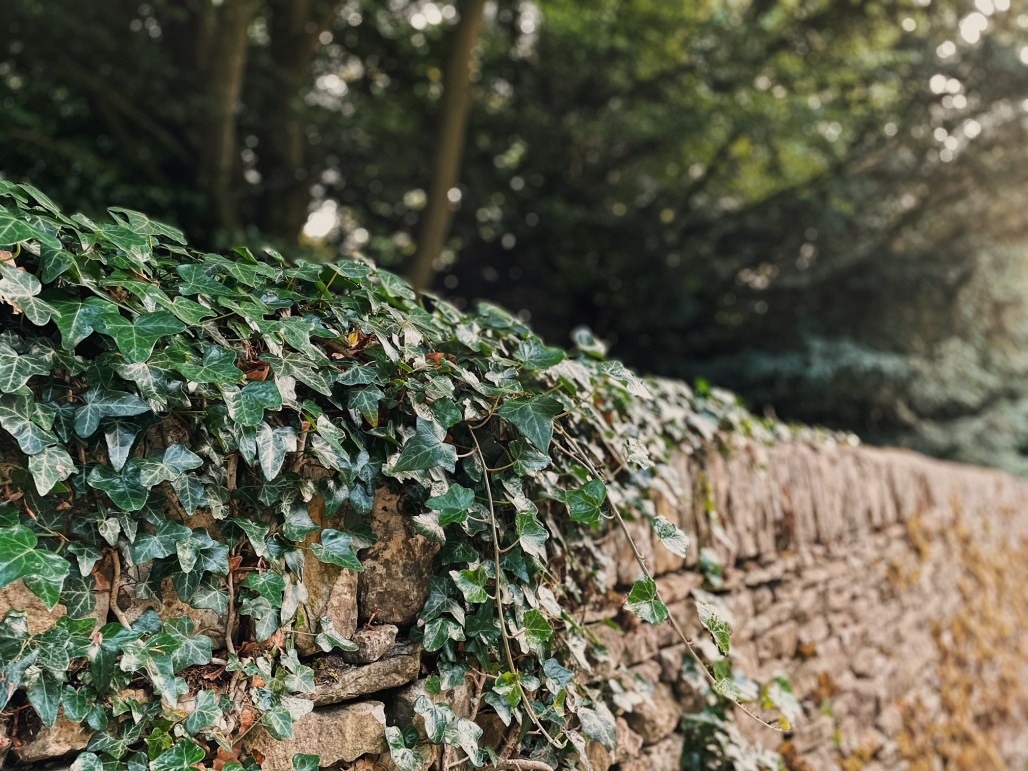
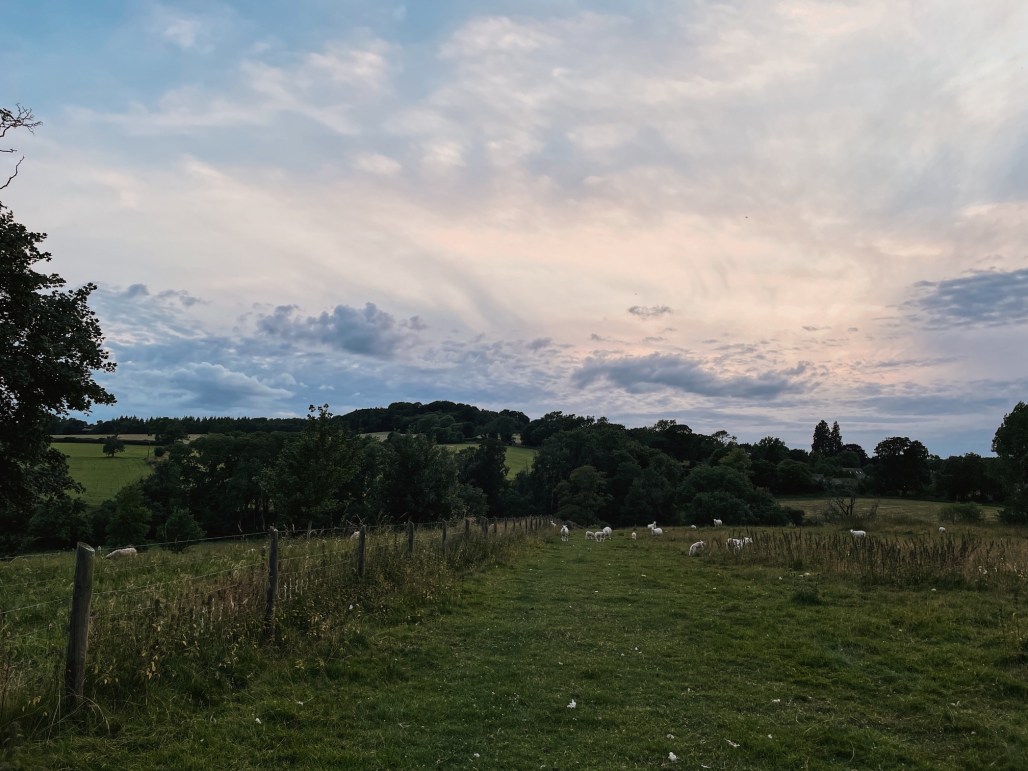
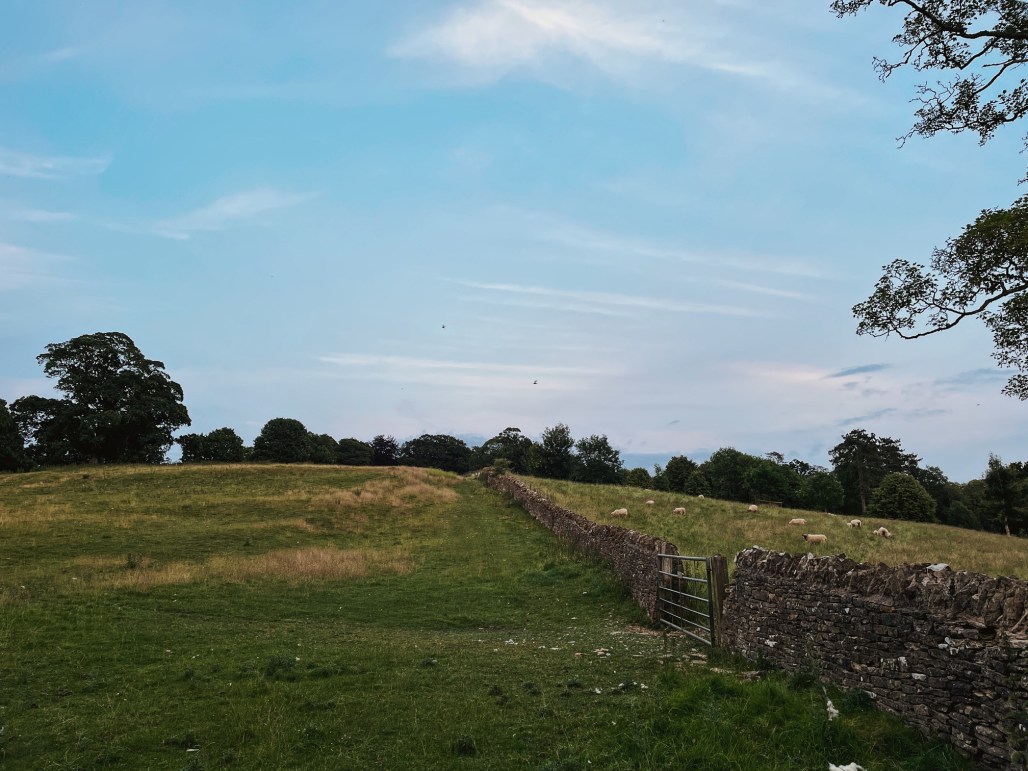
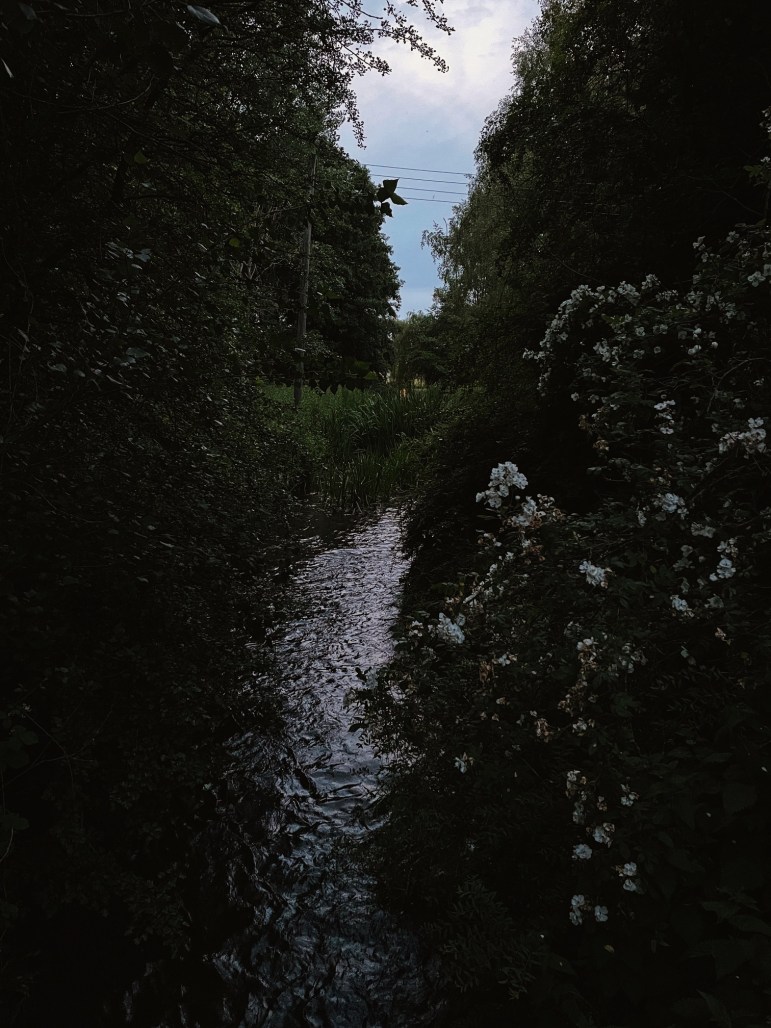
Heading northwest out of Stow, we followed the road and its tall stone walls for a while until we reached the entrance to the Abbotswood Estate and then the gates for the Gloucestershire Way & Heart of England Way—both public footpaths. Shortly after, we found ourselves hiking through the most magical wool-strewn sheep’s meadow I believe there ever was. Ewes stood or walked with their lambs, some of the lambs jumping and playing. The sky had begun its blushing, which cast a pinkish glow upon the white wool of the sheep. Andrew picked up a piece of wool lying on the ground and we swore it was the softest we’d ever felt. Even though we walked incredibly slowly, not wanting to leave the magical meadow, we finally came to the crossing of the River Dikler, where we stood on the footbridge and watched the water rush beneath us.

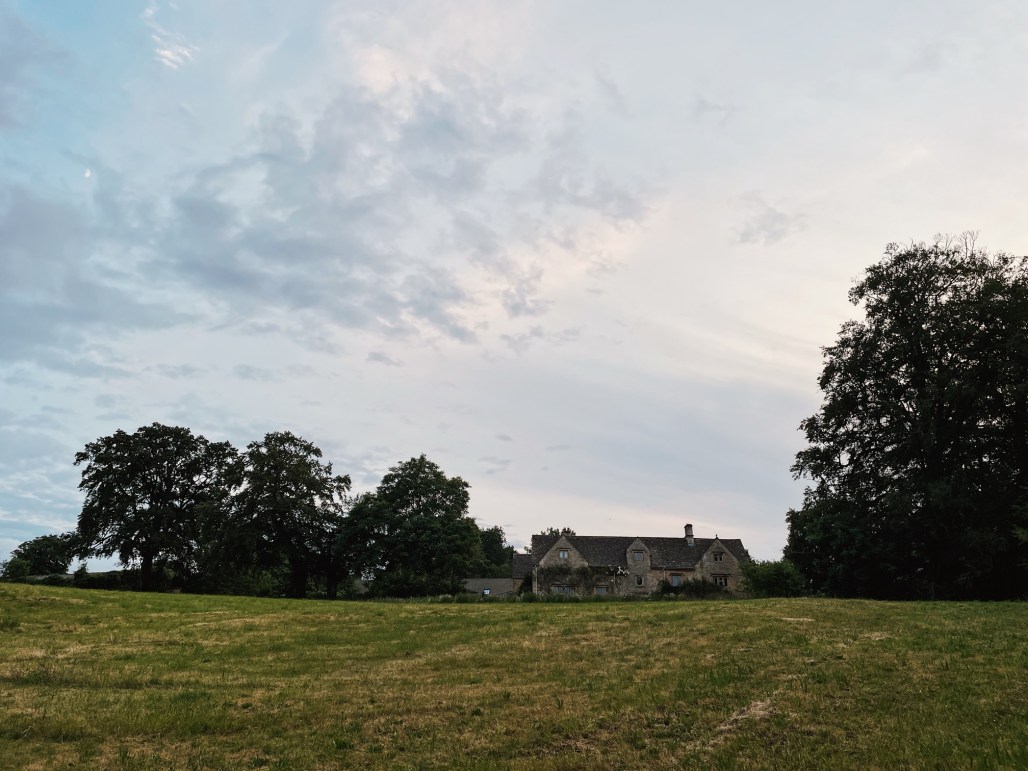
Walking up another hill, we crossed a sizeable hillside, only to realize we’d made a wrong turn and would have to backtrack right in front of a rather large manor house. Being Americans, we truly thought someone might shoot us for trespassing, so we hauled ass back toward the correct path. Our AirBnb hosts would later tell us that passing in front of these manor houses is completely normal and there’s no need to worry. So, next time we can take our merry time trespassing.
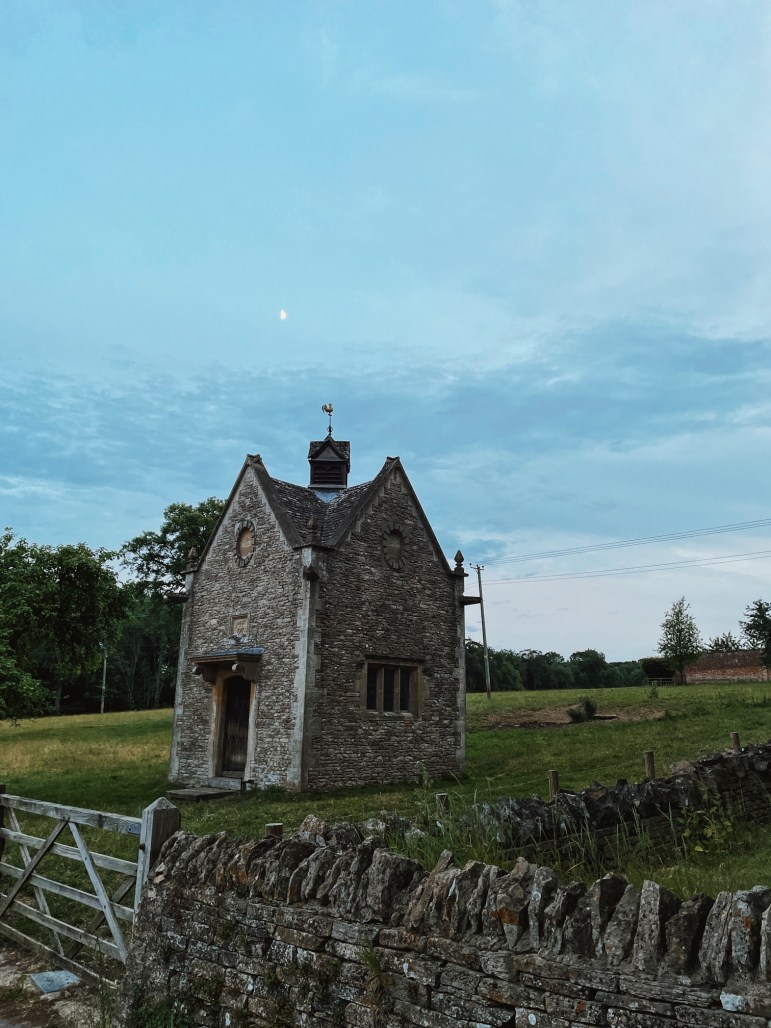
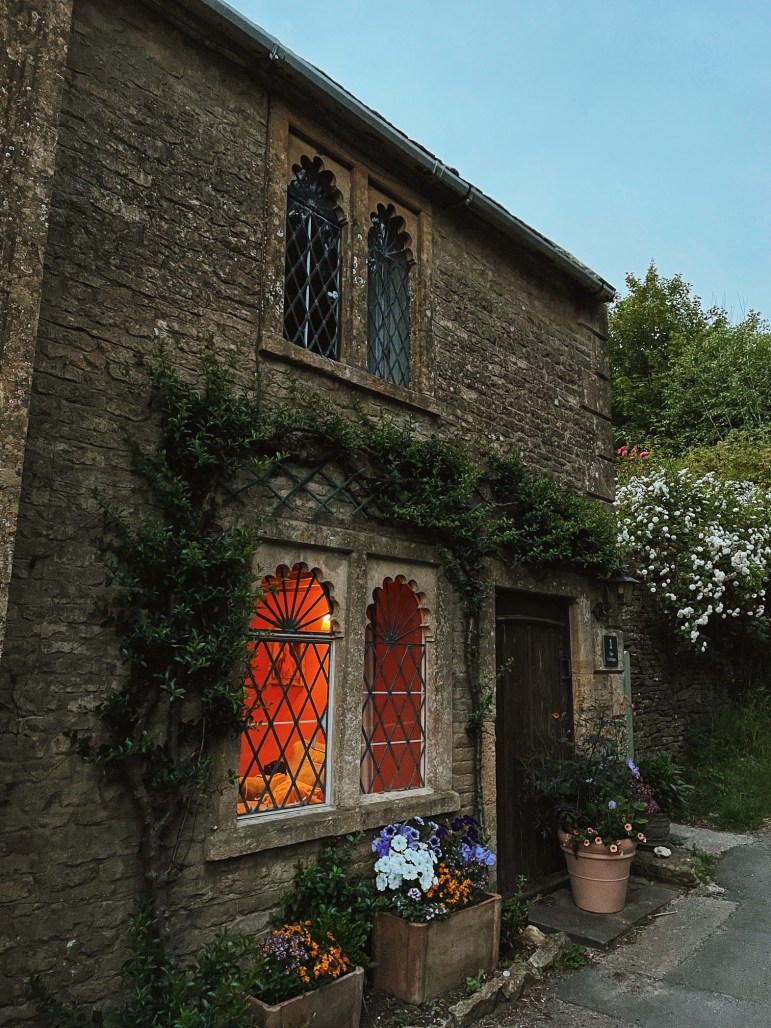
Back on the right track, we passed several of the estate’s stone barns and cottages, as well as a brick-walled garden and pond. We passed and said hello to a couple of folks out walking a pack of Labradors and imagined they were the estate owners wondering why the hell we were traipsing down their road. By the time we left the other side of the estate, it was almost dark, but that didn’t stop us from admiring a particularly lovely part of the river once again. On our way back up the hill toward Stow, we saw the beautiful circa 1800 spa cottages, their windows casting cozy glows upon any onlookers.
Admittedly, once we were trekking a footbath in the pitch black, I was wishing we had left earlier (or maybe not made that wrong turn), but when we arrived back in Stow and saw the streetlights glowing and candles alit in windows, I then felt the timing had been perfect.
Back in our cottage, I showed Andrew the photos I’d taken of the Rollright Stones. He pointed to a photo of the feather in the stone I’d been drawn to earlier and said, “Hey, I put that feather there!” An additional touch of magic to our day.
Until Part VI,
Lara
 awefaring
Leave a comment